Friday, 20 September 2013

Coventry...don't wait for somebody to send you there


It was intended as a romantic gesture, a night away from home with my better half as part of our anniversary celebrations. The place we were visiting met all the criteria I had set, not too far away from where we lived, somewhere we hadn't been to before, had things to keep us occupied within walking distance of our hotel and a choice of restaurants and bars close by to relax in on the evening.

"Coventry???", "Coventry!!!", "Coventry" (cue sniggers and laughter)...these were just some of the responses I had when mentioning to friends where I was taking my wife. The shock and in some cases hilarity shown by others put doubt in my mind whether this trip was such a good idea, after all Coventry is well known for being the proverbial place to send someone who isn't liked and even the local football team has decided to play their "Home" matches some 40 miles away in Northampton. However it was with all positive intents we set off determined to have a good time and see what Coventry city centre had to offer the visitor.


Set in the middle of a stilted ring road, the centre of Coventry houses a large pedestrianised shopping area, which admitably is not the most prettiest of retail experiences. The area is a mixture of precincts, malls and street shops meaning there are buildings of different ages, designs and architectural fashions which struggle to blend into one. However, this aside the centre does house a large number of established stores meaning plenty of choice and the opportunity of spending plenty of time browsing round the wide variety of shops. 
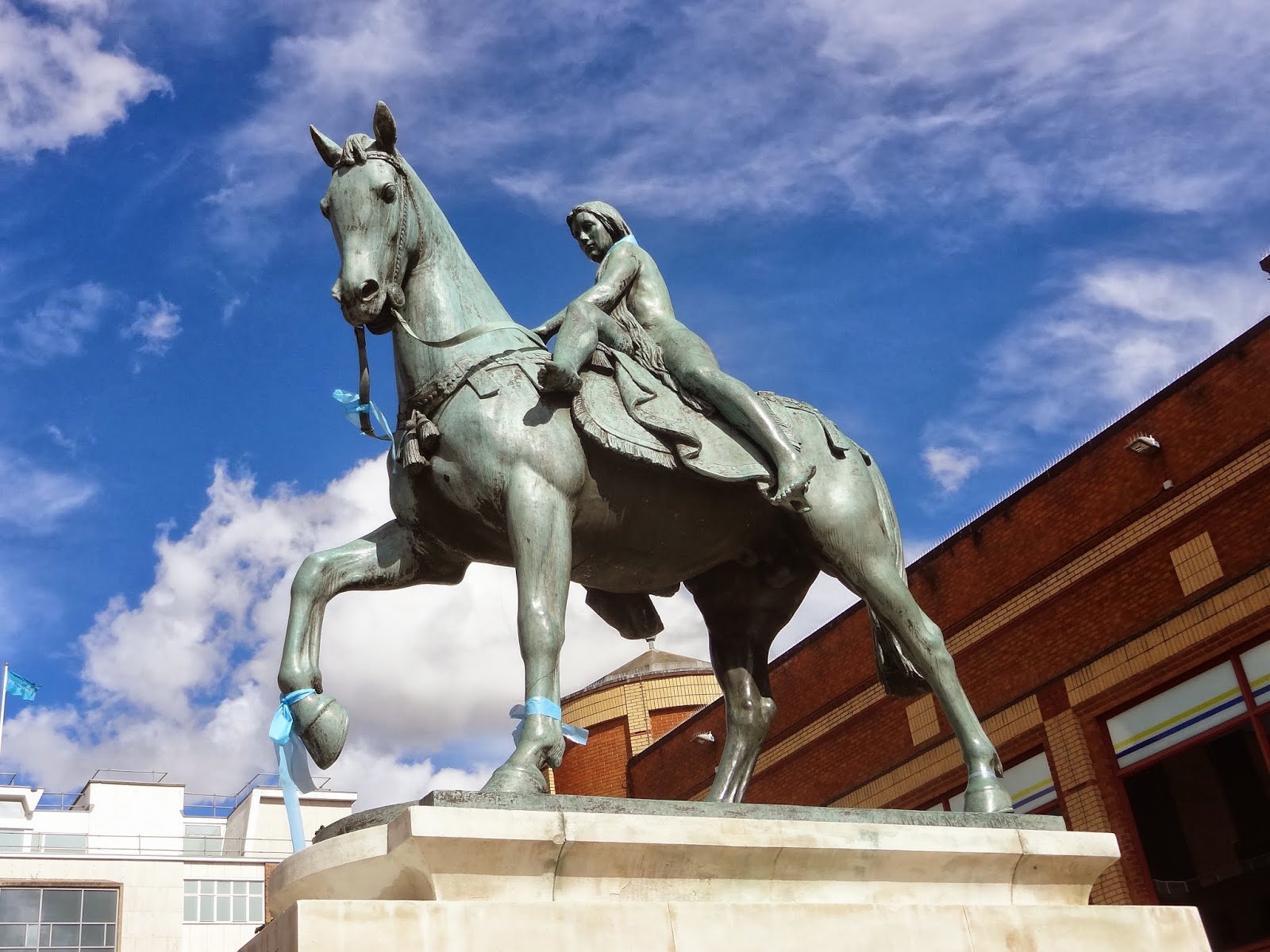
The large open square of Broadgate houses the statue of Lady Godiva, infamous in legend for riding naked through the streets of Coventry to protest at excessive taxes her husband, the Earl of Mercia imposed on the oppressed occupants of the city. The impressive statue shows her in her naked state astride her horse, her modesty being protected by her flowing locks of hair. Her naked exhibitism certainly caused a stir at the time but allegedly did cause her Husband to alter his tax policy and in turn make her a heroine in the eyes of the city forever more.


Towering over the skyline are the two spires of the Holy Trinity church and the Medieval cathedral, now just ruins following it's destruction during the Luftwaffe attacks of November 1940 that decimated the city. Only the tower, spire and the outer walls together with a bronze effigy survived the bombings but the building remains a popular tourist site, a poignant place to sit and reflect of the suffering caused by wars, in the roofless surroundings. Around the inner "Hallowed" grounds are numerous signs of peace and forgiveness for the atrocities caused such as the symbolic cross at the head of the alter, a copy of one made from original charred roof timbers, with the poignant message "Father Forgive" inscribed on the wall behind it. The new modern Cathedral built in the 60's is attached to the original, combining the two in a message of reconciliation between the horrors of the past with the hope of the future.


Further across the city centre is Spon Street, advertised as an attraction, the street houses a number of Medieval properties transported from various points of the city and renovated to produce a historical district. However, whatever good intentions were there are the time of setting this project up now seems to be a wasted opportunity for Coventry's tourist trade. Information boards giving details of the streets history over the ages are faded and in turn the buildings now house shops containing the likes of a hairdresser, audio equipment specialists and perhaps most disappointingly a kebab, take away shop. It would be interesting to see what the original Medieval inhabitants of the area would make of a "Ye old Tanning Salon", probably thinking some kind of witchcraft was being practised within.


Sunday morning in the Centre was a hive of activity witnessing the the Sunday ritual of the masses visiting their modern day cathedral....Ikea. A reflection of the secular behaviour of Modern Britain as cars queued to enter the stores car park whilst the church close by seemed barren of parishioners .Very different to the large scale out of towns outlets, this was Ikea's first city centre store in the UK with the store being spread over seven floors but just as popular as its counterparts.

Around the area it is evident that Coventry's "Concrete Jungle" reputation is still there in places, the ugly, threatening Subways under the ring road being a prime example. However, improvements to the shopping areas, the Skydome entertainment complex, together with the more cultured attractions such as the Cathedral, Belgrave theatre and the modern Herbert Art gallery & Museum make it a worth while place to visit ....through your own choice, no need to be sent there by others.  

Saturday, 31 August 2013

Kenilworth Castle....Battling for English Heritage


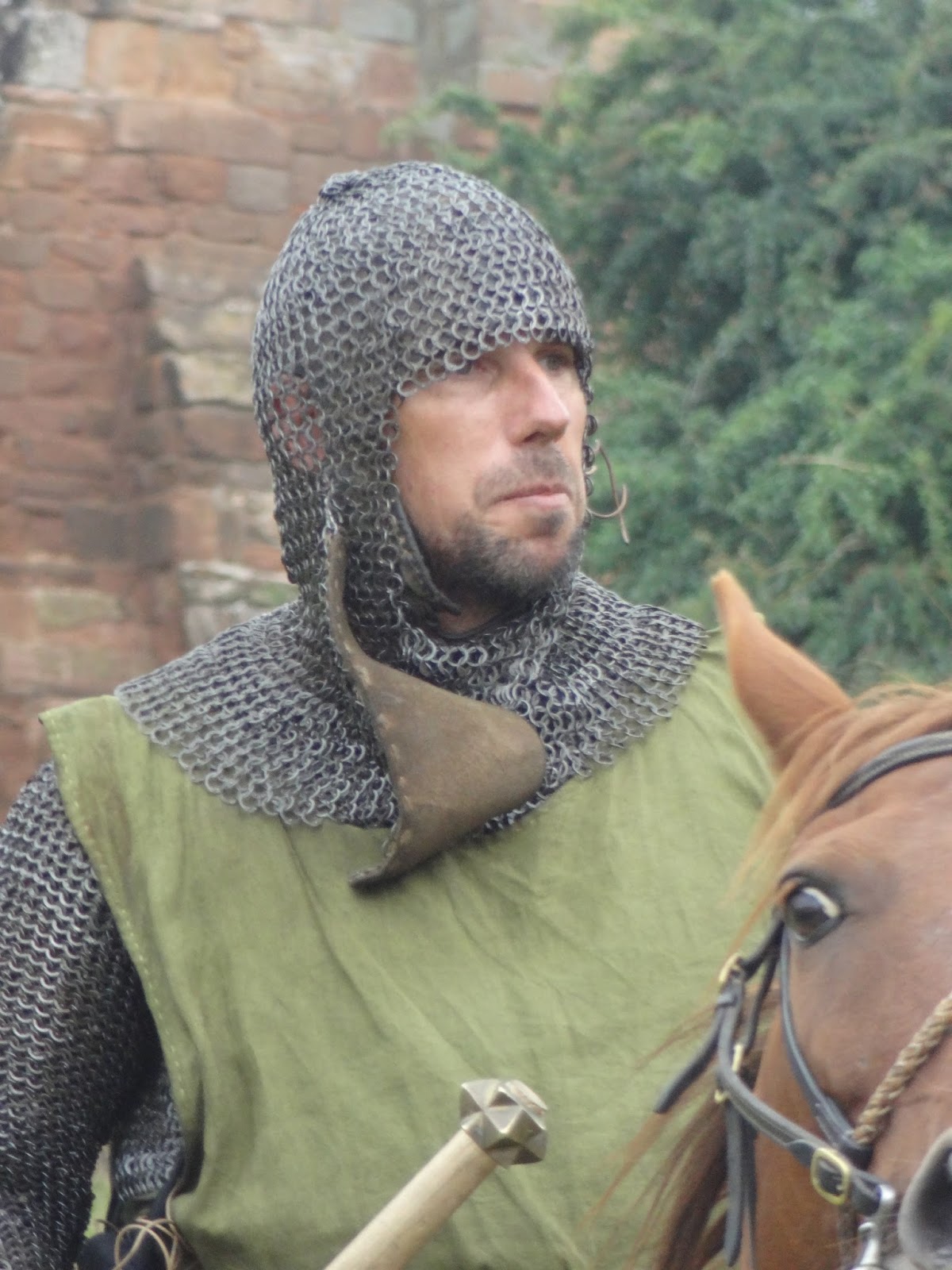
Norfolk skilfully manoeuvred his boisterous steed, facing his men the Earl spoke with a fervent passion, calling on the throng before him to give their all in the fight to take over the castle. Greeted by an approving roar the columns edged forward whilst on the Castle walls the heavily outnumbered Royalists could only stare out and hope the castle defences would be sufficient to stop them being over run. Screams rang out as men fell from a shower of arrows dropping from the sky sent by the Archers perched high on the turrets, but Norfolk’s army kept marching closer to their goal. Their battle cry rung out as they charged, waving their standards, swords at hand, shields protecting as the castles occupants attempt to repel them. Their first attempt fails and an aura of calm develops as casualties on both sides are carried away and the attacking masses retreat to regroup before trying again.

Amongst the quietness a child cried aloud…… his mothers swift response “ you can have an ice cream when the men have stopped fighting” bringing things back to reality.


This was Kenilworth Castle 2013 style and a re enactment event part of the English Heritages “Let battle commence” programme at sites all around the country. Having to compete against it’s much more heavily commercialised neighbour , the “Merlin Group” owned Warwick Castle, days such as these offer the public the chance to experience medieval activity at a much more family friendly price. Attractions throughout the day included 3 stages of the battle from 1266 that became a 6 month siege and demonstrations by the enthusiastic authentically dressed actors regarding armour, fighting techniques and life in a medieval camp. Shakespearean type performances outlined the story of the siege and the roles that the occupants of each camp would fulfil enthralling both young and old.


Kenilworth Castle set in the beautiful Warwickshire country side contains the ruins of the original Castle, the meticulously laid out  Elizabethan Gardens, a tea rooms set within a renovated medieval barn and a Tudor Gatehouse, built in 1571. Originating from Norman days the Castle has had a rich and varied history from Battles to Royal visits through to its destruction by the Parliamentary army during the English Civil war.


The large grounds offer ample opportunity for a wander round, exploring the ruins, climbing the ramparts,finding a labyrinth of hidden rooms, an historical adventure playground for kids of all ages.

The Elizabethan gardens have been beautifully recreated with the castle ramparts offering a fine vantage point to fully appreciate its lay out. Records dating from the 16th century giving a detailed description of the garden have allowed it to be authentically replicated, including fountains, statues, arbours and a bejewelled aviary.


The museum within the Gatehouse details the intriguing relationship between Queen Elizabeth 1st and Robert Dudley, Earl of Leicester who allegedly wooed the Virgin queen when she visited the site back in 1575. All this amid ongoing scandal of Dudley’s wife being found mysteriously dead at the foot of a staircase as their relationship blossomed. Today's newspapers would certainly have a feast of headlines at such a gossip ridden royal story.


This live medieval exhibition certainly seemed to capture the imagination of the young children amongst the large crowds attending the event. In turn, It certainly seemed the gift shop was doing a roaring trade as the mass fun filled sword fight involving scores of foam sword wielding children seemed to indicate. The English Heritage sites really depend on days such as these to plough much needed funds into their restoration works, one battle we should all be prepared to sign up for.

Friday, 9 August 2013

Kew Gardens....London's Botanical Beauty


Continuous sunny weather in London, surely not…but this years English summer has provided plenty of it. Therefore, reluctant to spend time indoors (there will be plenty of rainy London days to go inside the museums), a 30 minute tube journey from the capitals centre took us to the Royal Botanical Gardens at Kew. Set within a massive 300 acre site “Kew Gardens” as it’s more commonly known, is home to world's largest collection of living plants with species from all around the globe. This UNESCO World Heritage Site as Spread across its grounds listed buildings such as the historical Glass Houses, a royal palace formerly inhabited by the late King George III as well as iconic structures like the Pagoda in the Japanese garden.


The extent of the site and its many attractions mean you may have to be selective on what you see if you are a one off day visitor. Although the Land train which circles round to stopping points should allow more of the area to be seen if large amounts of walking is an issue to anyone. For any energetic children in your party there are numerous opportunities for them to let off steam.An adventure play ground and indoor themed play areas give the adults a chance to rest weary limbs, although the boating pool may be a little more strenuous for some.


Across the year various exhibitions take place on site promoting different aspects of the plant world, currently running is the "IncrEdibles". Housed in the Victorian Palm House, this exhibit educates visitors on the wonders of all types of edible plants. Inside the wonderfully historical glass and wrought iron structure, decorative spiral staircases take you up to the high level walkways allowing a birds eye view of the foilage beneath. Dating back to the 1840's, the glass houses host a vast range of world wide vegetation in all forms of shapes and colours . It’s literally a walking, interactive encyclopedia of flora, allowing kids in particular to learn about the different species through colourful hands-on quiz boards as well as offering the chance to feel and in some cases, smell them.


The more modern Princess of Wales conservatory hosts 10 different climate zones each with controlling temperatures suited to the various plant life within it. From the desert like temperatures of the cacti room, to the more humid heat of the rain forest, though to the swamp area, trees and ferns can be observed at close hand. Keep your eyes open for a surprise encounter as we had when we came across a Water Dragon Lizard casually sitting amongst the vegetation. Apparently the reptiles earn their keep by being a natural pest control within the conservatory.


The largest of the Victorian glass houses is the Temperate House, although seemily barren of greenery on our visit, we later found out that a five year renovation is due to take place hence the scaling down of the plant life within. However it is still a marvellous structure to see, with the adjacent "Xstrata tree top" walk affording a particularly good view with descending Heathrow bound planes flying at low level in the background.  At 60ft high, the walkway is a 200 metre trek around the top of a forest containing Chestnut and Oak trees offering great views across the gardens and out towards the London skyline.


Although not a massive gardening fan myself, I did find the visit thoroughly enjoyable and
interesting, particularly the use of the information boards, showing how the plants relate to your own life such as production of coffee beans from seed to your mug. The great thing about Kew is that each of the seasons will offer a different experience as the various plant life encounters the conditions it thrives in. This summer visit had allowed us to see the flower beds in full bloom but a return visit to see the autumnal reds, browns and golds of the trees foilage would be just as spectacular.


 Following the short walk back to Kew Gardens underground station you’re greeted with a range of small independent shops to browse round and an outdoor sitting area at the Railway inn to get some well deserved refreshment. After all it’s not just the plants that need regular watering.


Sunday, 28 July 2013

Natchez Trace Parkway Roadtrip Part 2 - Tupelo to Natchez


It was a cloudy but humid Mississippi morning as we left Tupelo to continue our journey along the Natchez Trace Parkway. Having completed 190 miles on the previous day we still had around 260 miles and a number of stop off points along the route before we reached Natchez, which was the end of the Parkways southern route.


Once again the road seemed deserted, the only contact we had with anything other than nature was a couple of cyclists taking a leisurely ride through the woodland settings. Our first stop of the day was at mile post 233, at the creepy sounding "Witch Dance" a site reportedly used as a Witches gathering place in times gone by. There was little there to view other than the information board and a patch of ground where the grass mysteriously never grows. Perhaps a sunny bright morning didn't create the right atmosphere, however we had no intention of returning at midnight under a bright full moon to see if it improved the experience.


With no Gas stations allowed along the parkway we turned off for the small town of Houston, Mississippi in order to fill the car up. It was very typical of other towns we had seen in the Southern states, very welcoming, clean, pretty and vehemently showing its patriotic side with the "Stars and Stripes" flag evident on all buildings both commercial and residential. We took a stroll round a square of small independent shops with the grandeur of the large domed city hall impressively standing out in the centre of the town.


Back on the Parkway we came to the French Camp Historic District, a log cabin village demonstrating how American life was lived in the early 1800's as this region gradually developed. The wooden buildings together with beautifully manicured grounds and a collection of vintage farm equipment give an authentic feel to the place, assisted by a museum giving relevant information regarding the sites history. We stopped for a walk round and indulged in the most wonderful Mississippi Mud Pie served in the cafe manned by church youth groups who visit the site for summer camps.
  
Our next scheduled stop was at the "Cypress Swamp",
which was a fascinating place. Although
literally a stones throw away from the car park and road, it felt like we were in the middle of the wilderness, at one with all the wildlife and nature. Wooden platforms provide a passage across the swamp allowing an up close and personal experience with the abundance of insects, lizards and birds around the area. The bright green algae on the surface of the swamp make it look like a billiard tables green baize, until disturbed by an insect landing or falling leaf. Floating logs peeping out the top of the swamp played mind games as you think you may have seen an eye blink and it could in fact be a part submerged Alligator. Part excitement, part nervousness takes over as the thrill of maybe being so close to one of the wonderful creatures is played against the fact that you could be feet away from a dangerous reptile with no one around to help. At the far end of the swamp as the platform finishes, a muddy path gives access further into the forest area, allowing a trip right along the edge of the swamp.......whilst still glancing back at the Log/Alligator.


Having completed around 200 miles we decided to have an overnight stay in Ridgeland near Jackson, Mississippi.Although only a mile off the parkway it seemed like a different world to what we had experienced, lines of motels, restaurants, gas stations and Cars everywhere...something we had seldom seen in the past two days journey.  

Early the next morning we took a detour off the Parkway and headed to the historic city of Vicksburg on the banks of the Mississippi to visit the mammoth "National Military Park", a 16 mile self driven tour commemorating the Civil War Battle. Inspiring monuments honouring the fallen are along the route ranging from small statues to towering domed structures such as the Illinois Memorial. As well as the 1,300 plus monuments there is a restored Union ironclad ship "USS Cairo" which was recovered from the Mississippi years before. This is a must visit place if in the area, bringing home the solemn consequences of such a large scale war for both the North and the South.


From Vicksburg we chose not to back track to our original route but to visit "Windsor Ruins" and return to the Parkway further on down its route. Travelling down a small windy rural road for what seemed miles was a little worrying considering there were no other building around, just an abundance of trees. Eventually a sign instructed us to turn into a small gap in the forest and on to a dirt path, it was then through a gap in the branches we could see a number of towering Greek style columns rising up through the woods. The Windsor plantation house, completed in 1861, was considered one of the most beautiful in the Antebellum south. However, destroyed by a fire in 1890 all that remains now are the 23 Corinthian columns in the middle of a woodland with nothing around for miles. With the forest appearing to be creeping ever nearer it was hard to imagine the site in it's former glory, grounds which covered 2,600 acres, a place frequented by Mark Twain and also used as a base during the Civil war.

 
We reconnected with the Trace Parkway with around 30 miles left to travel until we reached the city of Natchez. A further 15 miles on we stopped at "Mount Locust", a former inn, claiming to be one of the oldest sites in Mississippi dating from 1780. The wooden cabin had been restored to its appearance of 1820 and allowed a walking tour round it with rooms containing furniture, decor and equipment from that time. The site also offered plenty of walking paths into the forest area for those who wished to include a trek into their days itinerary.

 
A final stop at Emerald Mound, a large grassed platform built by the native Indians and used for ceremonial events completed our sights along the Parkway route and left us a final 10 mile journey into the city of Natchez. We arrived at the perfect time just as the sun was going down. A short drive up to the Bluff Top allowed us the most beautiful sights overlooking the vast Mississippi, a most wonderful introduction to this historical city.


The Natchez Trace Parkway had offered us the chance to experience a large insight into American history from the Native Indians, War of Independence, Civil war and Pioneer days. We had visited some fascinating sites, seen the most wonderful views and experienced a fascinating close up with nature. Surprisingly we had seen little other traffic along the actual trace parkway route, no more than 20 cars along the 400 plus mile journey, however this had enhanced the trip making it seem that we had the attractions all to ourselves. I'm sure we just fell lucky going in the mid week and also out of the main holiday season as there are activities available in abundance. I am sure the area is usually well frequented catering for Motor Cyclists, Hikers, Adventurists, Photographers, Cyclists, Boat Owners, Nature lovers, History Buffs amongst others ....something for everyone, all for free too...the locals are so lucky. 

Thursday, 4 July 2013

Natchez Trace Parkway..a road trip Part 1...Nashville to Tupelo

A hot, sunny Monday in June

We were leaving Nashville after attending the Country Music Associations week long festivities...CMA Fest. However, the next stage of our road trip was going to be as far removed from the music, the activities and events we had just witnessed that you could probably get. We were at the Northern entrance to the Natchez Trace Parkway, a 444 mile roadway passing through the states of Tennessee, Alabama and Mississippi.
Maintained by the National Park Service, the route follows close to the original trace all the way from South Nashville, Tennessee to Natchez, Mississippi, along a two lane road which is barred to commercial vehicles. The original route has seen it's fair share of history and from the native American Indians to the War of Independence through to the American Civil war the trail has been used to travel through the area. Evidence of this would be found along our journey with a number of stop offs with monuments, burial sites and natural beauty spots to take in.
 
Conveniently by the start of the Parkway was the infamous Loveless cafe, serving its traditional Southern breakfasts. This set us up well for the long journey ahead and in turn allowed us to experience a warm friendly southern welcome with a homely, family atmosphere being evident in the restaurant. The cafe is reknown for its hot biscuits and they were certainly the nicest we had ever eaten during our time in the US.
                                                                                             Our journey nearly got off to a bad start as I approached the entrance to the route at a bit too excessive speed and was greeted by a stationary police car flashing its lights and its occupant waving at me to slow down, thankfully on this occasion the officer thought this was sufficient. The road has a restricted speed limit of 50mph which is reported to be strictly adhered to by the traffic cops. We instantly came upon the impressive Birdsong Hollow bridge, so we stopped for a quick photo opportunity, and a brief glance back to ensure the traffic officer had not decided to follow. Lesson learnt, the cruise control on our car was set to the appropriate speed and we set off, taking a short detour off the route to visit the small but picturesque town of Leipers Fork with its collection of Antique and Craft shops

 Back on the trace parkway, we continued southbound along the winding tree lined route spotting wildlife along the side of the road, Snakes, Wild Turkeys and Deer. It was possibly the least stressful drive I have ever encountered, with the sun shining, the beautiful nature abound and the lack of other vehicles around, we had seen only a handful as we had travelled along. Periodically sign posts advised of an upcoming site of interest, whether that be historical, cultural or for leisure activities such as a hiking route.


Our next stop was at Jackson Falls, where a short walk into the forest led to a steep pathway down to a shallow stream where crystal clear water was cascading down over the rock face.It was so quiet the only noise being the water dropping on to the rocks at the bottom of the waterfall. We sat back and took in the peacefulness of the place, there was something therapeutic about the silence with just the rushing of water evident.Although the return trip up the slope was strenuous in the humid heat, it had been well worth it for the relaxing environment we had just encountered.                   

We continued our journey basking in the air conditioned respite the car was offering, taking a short stop at another waterfall, Falls Hollow, where a box turtle rested quietly by our side as we sat relaxing on the viewing platform.
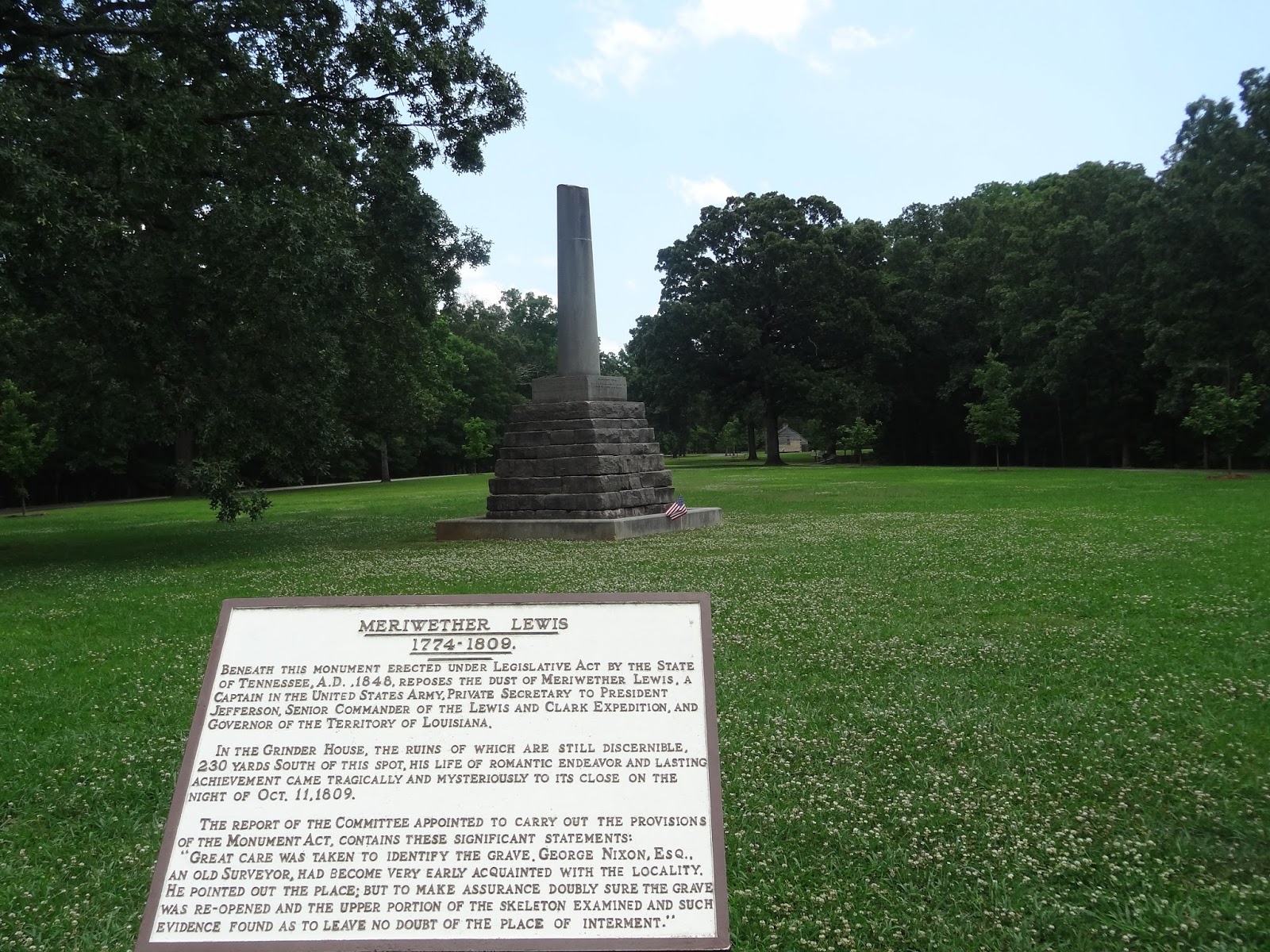
Six miles further on we stopped at a memorial area to Merriweather Lewis, the famous explorer. Uncertainty still remains about what actually happened here to cause his death in 1809, whether it be suicide or murder, a single column monument signifying his burial place. 


Along the route, parts of the original old trace pathway can be visited and walked upon. It's hard to imagine that this was the first major route in the area used by Indian Natives, Explorers, Settlers and Armies making it an integral part of the regions history. In places the "Old Trace" had sunken over the years highlighting the narrowness of what was such a prominent route.


Time restrictions meant we were unable to stop at all available points of interest so we skipped some of the Picnic areas and hiking trails, which ranged from short walks into the forest through to multi mile treks for the real enthusiasts. After approximately 100 miles we crossed the state line into Alabama and stopped for a rest at Colbert Ferry. This was a large park area offering Boat launches,walks, picnic tables, Campsites and clean restrooms which as with the other stops highlighted how well the trace parkway is maintained by the Park services.The large car parks demonstrated how busy this place could be but once again we had it all to ourselves, we presumed it must be a different story on the weekends or main summer months when the locals would flock to nature spots such as this. Based on the side of the Tennessee River the stop afforded views of the magnificent John Coffee Memorial bridge stretching across the waterway.


After entering Mississippi we made our final stop of the day at Pharr Mounds, a native Indian burial site dating from 1-200 A.D. As at each site information boards gave relevant details about the role the various points of interest had played in the Traces history none so more than here where illustrations showed how the mounds were built and used. Looking out across a large 90 acre field, 8 dome shaped grass mounds can be viewed which contain human remains and possessions from the period.


At Tupelo we left the route for our overnight accommodation, a lakeside cabin at Tombigbee State park. Here we had the perfect evening, a glorious picturesque view, relaxing on a swing chair on the outdoor porch. As the sun set and darkness fell we experienced the flash of fire flies, followed by a deafening orchestra of insect calls, topped only by the appearance of a couple of wild raccoons nervously investigating outside our porch door.


We had travelled around 190 miles and had been on the road for around 6 hours including stops.   
It had been a long but fulfilling day seeing so much variety of history, culture and nature, yet we were only part way down our journey.....more was to come 
 
Part two to follow -Our continued journey down the Natchez Trace Parkway - Tupelo to Natchez